Imagine walking into your home and having the lights dim, the thermostat adjust, and your favorite playlist start playing—all without lifting a finger. Welcome to the world of smart home automation, where convenience meets innovation. With today’s technology, turning your living space into a futuristic haven is easier than ever.
But before you dive headfirst into the gadget pool, let’s talk installation. It’s not just about picking the coolest devices; it’s about making sure they work together like a well-rehearsed boy band. From smart speakers to automated blinds, getting everything set up can feel like trying to assemble IKEA furniture without the instructions. Fear not! This guide will walk you through the ins and outs of smart home automation installation, ensuring your home becomes the envy of the neighborhood—without any missing screws.
Understanding Smart Home Automation
Smart home automation transforms traditional living spaces into intelligent environments. This technology connects devices to a central system, enabling seamless control and communication among them.
What Is Smart Home Automation?
Smart home automation refers to the integration of devices allowing control through a central system. Common components include smart lights, thermostats, security systems, and appliances. These devices interact through a network, often controlled via smartphone apps or voice commands. Users can program routines or remotely manage settings. Various brands and platforms support interoperability, ensuring a broad range of choices.
Benefits of Smart Home Automation
Smart home automation offers numerous advantages for users. Enhanced convenience comes from being able to manage multiple devices from a single platform. Energy efficiency improves as users can schedule lighting and heating according to their routines. Security increases with smart cameras and alarms providing real-time alerts and remote monitoring. Additionally, accessibility features assist those with disabilities, promoting independence and ease of use.
Key Components of Smart Home Automation
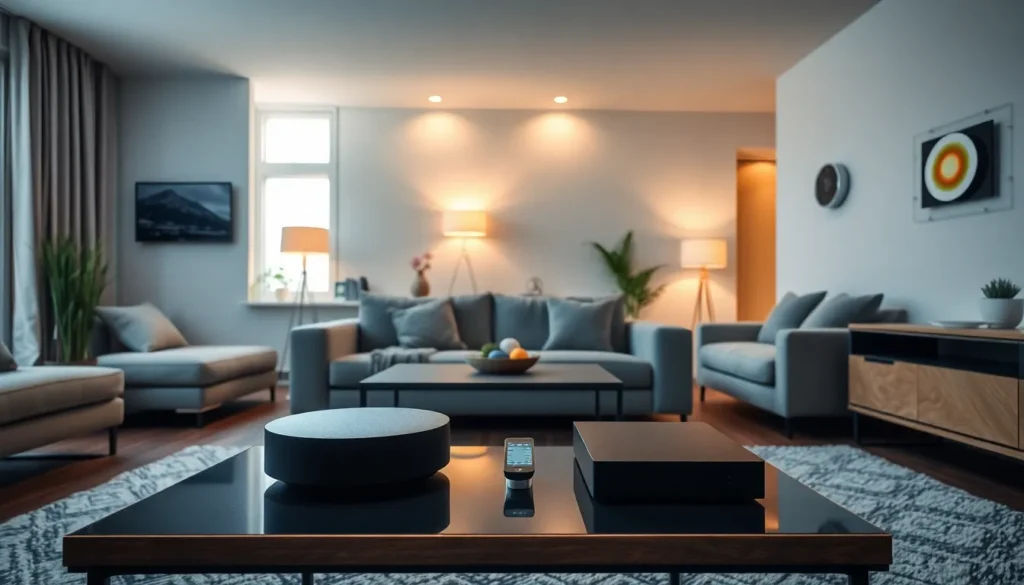
Smart home automation relies on several key components that enhance user experience. These components interact to create an efficient and connected living environment.
Smart Hubs
Smart hubs serve as the central control unit for all connected devices. They enable communication between devices, streamlining operations. Users manage various functionalities through one application, simplifying interactions. Popular options include Google Nest Hub and Samsung SmartThings Hub. Incorporating a smart hub can significantly improve device integration, ensuring seamless automation across the home.
Smart Devices
Smart devices play a crucial role in home automation. These include smart lights, thermostats, cameras, and security systems. Smart lights adjust brightness and color based on user preferences or settings. Thermostats learn habits, optimizing heating and cooling for energy efficiency. Security cameras provide real-time monitoring and alerts, enhancing home safety. Utilizing multiple smart devices together maximizes convenience, creating a fully automated experience tailored to individual needs.
Steps for Smart Home Automation Installation
Successful smart home automation installation requires careful consideration and execution. Following these steps ensures a streamlined process and optimal results.
Planning Your Smart Home Setup
Initially, assess the needs and priorities for the smart home. Identify areas for improvement such as security, energy savings, or convenience. Create a list of desired devices and features. Consider the layout of the home and compatibility with existing systems. A comprehensive plan simplifies installation and enhances efficiency.
Choosing the Right Devices
Selecting appropriate devices is crucial. Research various brands and models based on specific needs. Popular smart lights include Philips Hue and LIFX, while renowned thermostats feature ecobee and Nest. Evaluate compatibility with the chosen smart hub. Reviews and expert recommendations help in making informed decisions that align with personal preferences.
Installation Process
Start the installation by setting up the smart hub. Follow manufacturer instructions for connecting devices. Ensure a stable Wi-Fi network to facilitate seamless communication. Install smart devices according to their specific guidelines, paying attention to placement for optimal functionality. Testing each device after installation guarantees they operate correctly within the system.
Costs Involved in Smart Home Automation Installation
Smart home automation installation involves various costs that potential users must consider. Understanding these costs helps in budgeting effectively for a smart home transformation.
Initial Investment
Initial investment in smart home automation varies widely. Basic setups with essential devices, such as smart lights and a hub, range from $200 to $500. Comprehensive systems with advanced features, security cameras, and smart locks can cost anywhere between $1,000 and $3,000. Popular brands like Philips Hue and Nest may carry higher price points but often provide reliable quality. Professional installation also incurs extra costs, generally around $100 to $200 per hour. Assessing needs and preferences guides users in determining an appropriate budget for their smart home setup.
Ongoing Maintenance Costs
Ongoing maintenance costs represent an integral aspect of smart home automation. Monthly subscription fees for monitoring services and software updates usually range from $10 to $30. Some devices may require periodic replacement of batteries, costing about $5 to $20 each. Users should also account for increased energy consumption due to smart devices, potentially adding $5 to $15 to monthly electricity bills. Regular software updates can further incur costs, especially if users opt for premium features or enhanced security. By factoring these ongoing expenses into their budget, homeowners maintain a functional and up-to-date smart home environment.
Embracing smart home automation can significantly enhance daily living by offering convenience and efficiency. With the right installation process in place homeowners can enjoy a seamless integration of various devices that work harmoniously together.
By carefully selecting devices and planning the layout it’s possible to create a tailored environment that meets individual needs. While costs may vary understanding the investment required ensures a successful transition to a smarter home.
Ultimately the benefits of improved security energy efficiency and user accessibility make smart home automation a worthwhile consideration for anyone looking to elevate their living space.