Imagine walking into your home and having it greet you like an excited puppy. That’s the magic of smart home hardware. Gone are the days of fumbling for light switches or wondering if you left the oven on. With a few gadgets and gizmos, your house can transform into a tech-savvy sanctuary that anticipates your every need.
From smart thermostats that know your comfort zone to security cameras that keep an eye on things while you binge-watch your favorite series, smart home hardware is revolutionizing how people live. Embracing this technology isn’t just about convenience; it’s about creating a lifestyle that’s efficient, secure, and downright fun. So why not let your home do some of the heavy lifting? Buckle up as we dive into the world of smart home gadgets that’ll make you wonder how you ever lived without them.
Overview of Smart Home Hardware
Smart home hardware includes a variety of devices that connect to the internet and communicate with each other, enhancing the overall living experience. These devices include smart lights and smart locks, which provide both convenience and improved security. Connectivity among devices allows for centralized control through a mobile app or voice assistant, streamlining everyday tasks.
Smart thermostats monitor temperature patterns, adjusting settings for optimal comfort and energy efficiency. According to the U.S. Department of Energy, implementing a smart thermostat can save homeowners around 10 to 12 percent on their heating bills. In addition to energy savings, smart security cameras offer peace of mind by providing real-time monitoring and alerts for unusual activity.
Home automation hubs serve as the central point for controlling various smart devices. These hubs support interoperability, making it easy to manage multiple devices from different manufacturers. Many systems integrate with common voice assistants, simplifying user interaction.
Smart speakers not only play music but also act as command centers, allowing users to control other smart devices using voice commands. Additionally, smart sensors detect changes in the environment, such as motion or water leaks, alerting homeowners to any issues that require attention.
Robotic vacuum cleaners represent another area of smart home technology, providing an efficient way to maintain cleanliness with minimal user input. As more homeowners adopt these technologies, the smart home hardware market continues to grow. Research indicates the global smart home market could reach $135.3 billion by 2025, reflecting increasing consumer interest and adoption.
Embracing smart home hardware enhances quality of life and promotes energy efficiency, making daily tasks more manageable and homes safer.
Types of Smart Home Hardware
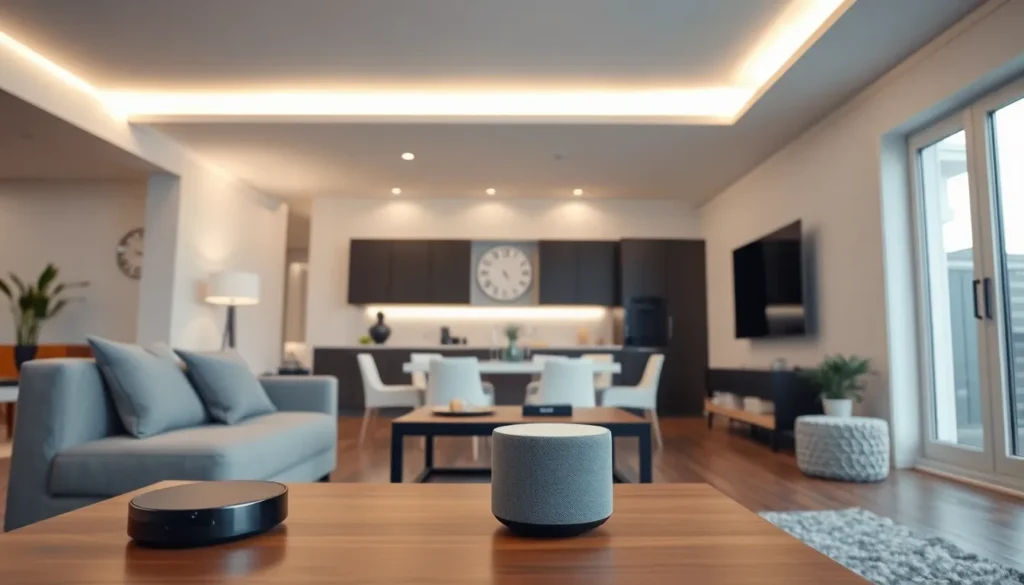
Diverse categories of smart home hardware enhance convenience, security, and efficiency in daily living. Each type of device offers unique functionalities that contribute to a streamlined home experience.
Smart Speakers and Displays
Smart speakers and displays serve as control hubs for other smart devices. These devices enable users to issue voice commands for tasks like adjusting lighting or playing music. Features include built-in virtual assistants, allowing instant access to information and entertainment. With capabilities to make calls or send messages, smart speakers facilitate communication hands-free. Smart displays additionally show weather updates, recipes, and calendar reminders, enhancing functionality beyond audio interaction.
Smart Lighting Solutions
Smart lighting solutions provide customizable lighting options for any atmosphere. Many systems allow users to adjust brightness and color through mobile apps or voice commands. Energy efficiency is a significant benefit, with LED bulbs consuming up to 90 percent less energy than traditional incandescent bulbs. Smart lights can also be programmed to turn on or off based on specific schedules, offering convenience and security. Integration with motion sensors enables automatic adjustments based on presence, further enhancing user experience.
Smart Security Systems
Smart security systems ensure comprehensive protection for homes. These systems often include surveillance cameras, smart locks, and alarm systems that can be monitored remotely. Real-time alerts notify homeowners of suspicious activities or unauthorized entry. Many security cameras have high-definition video recording, enabling clear monitoring. Additionally, smart locks provide keyless access, enhancing convenience without sacrificing security. With advancements in technology, these systems also integrate with existing home automation hubs for seamless control.
Benefits of Smart Home Hardware
Smart home hardware offers numerous advantages that enhance everyday life. Users experience increased convenience and efficiency in managing their environments.
Convenience and Automation
Smart devices streamline daily routines. Voice-activated assistants enable hands-free control of various functions. Scheduling lighting, heating, and security routines simplifies home management. Automatic adjustments based on pre-set preferences enhance comfort seamlessly throughout the day. Smart appliances can also interact with users remotely, enabling monitoring and control even from afar.
Energy Efficiency
Smart home technology contributes significantly to energy savings. Smart thermostats adjust temperatures based on usage patterns, resulting in savings of 10 to 12 percent on heating bills. LED smart lights reduce energy consumption by up to 90 percent compared to traditional options. Energy-efficient appliances optimize performance and reduce waste. Homeowners can monitor energy usage in real time, providing insights that encourage further efficiency improvements.
Enhanced Security
An integrated security system provides peace of mind for homeowners. Smart locks offer remote access, allowing users to control entry from anywhere. Surveillance cameras deliver real-time monitoring, enhancing safety and deterring potential threats. Automated alerts notify users of any unusual activity, ensuring timely responses to security concerns. Systems that integrate with smart assistants further improve user convenience and control over home safety.
Challenges and Considerations
Smart home hardware presents both potential and challenges. Users must navigate various compatibility and security considerations to maximize benefits.
Compatibility Issues
Compatibility among devices remains a crucial challenge for smart home systems. Some devices operate on proprietary protocols, causing integration issues with other brands. Users often face hurdles when attempting to connect devices from different manufacturers. Without a universal standard, it’s essential to research compatibility before purchasing new gadgets. Ensuring devices work seamlessly together can save frustration and enhance user experience. Homeowners may also consider investing in a central hub designed to bridge multiple technologies. A hub can mitigate issues by allowing devices to communicate effectively and perform unified tasks.
Privacy and Security Concerns
Privacy and security concerns often accompany smart home technology. With devices constantly connected to the internet, vulnerabilities can arise. Hackers may exploit weaknesses in software, gaining unauthorized access to personal data. Users need to implement strong passwords and regularly update device firmware to reduce risks. Monitoring device settings for unusual activities further enhances security. Encrypted communication between devices can protect sensitive information from potential breaches. To safeguard privacy, homeowners should carefully read privacy policies and select devices with robust security measures. By prioritizing security in the smart home environment, users can enjoy the convenience without compromising personal safety.
Embracing smart home hardware can truly elevate daily living. With devices designed for convenience security and efficiency homeowners can transform their environments into responsive spaces that cater to their needs. The benefits are clear from energy savings to enhanced safety features making smart technology a worthy investment.
As the market continues to grow and evolve it’s essential for consumers to stay informed about compatibility and security measures. By taking these factors into account individuals can fully enjoy the advantages of a smart home while minimizing potential risks. Ultimately the integration of smart home devices represents a step towards a more connected and efficient lifestyle.