In today’s fast-paced digital world, a strong wireless network is as essential as a morning cup of coffee. Without it, navigating the internet feels like trying to swim through molasses. Wireless network hardware is the unsung hero behind seamless streaming, smooth video calls, and those late-night gaming marathons.
Overview of Wireless Network Hardware
Wireless network hardware consists of various devices essential for connecting computers and other devices to a network without physical cables. Routers serve as the central hub, directing data packets between devices and the internet. Access points extend network coverage, allowing multiple devices to connect in larger areas.
Network adapters enable devices such as laptops, smartphones, and smart TVs to communicate wirelessly. Their role is crucial in providing users with mobility and ease of access. Switches, while typically associated with wired networks, also play a role in wireless setups by connecting different devices to access points efficiently.
Signal strength greatly impacts performance. Devices that support advanced standards like Wi-Fi 6 deliver faster speeds and better efficiency, reducing latency during high-demand activities such as online gaming or streaming. Security features integrated into wireless hardware, like WPA3 encryption, protect user data against unauthorized access.
Mesh networks represent an innovative approach to enhancing coverage. These systems utilize multiple nodes working together to broadcast a strong wireless signal throughout larger spaces, overcoming dead zones.
Lastly, antennas, whether internal or external, improve signal range and clarity. Understanding these components helps users choose the right equipment, optimizing their wireless networks for reliable performance in home and office environments.
Types of Wireless Network Hardware
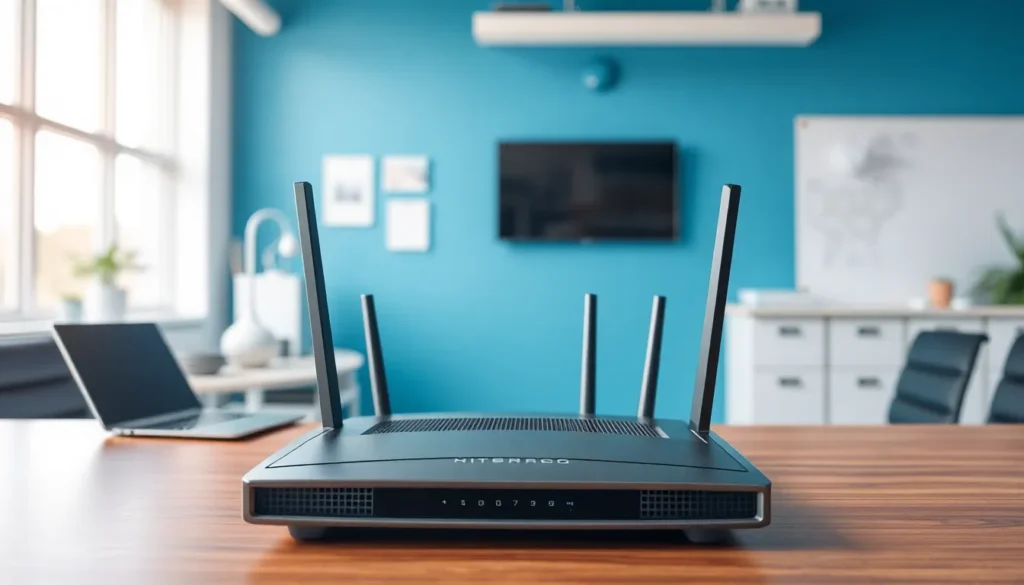
Understanding the various types of wireless network hardware helps maximize network performance and coverage. Each device plays a vital role in ensuring seamless connectivity.
Access Points
Access points connect to a wired network and extend its wireless coverage. It allows multiple devices to connect to the network simultaneously. With features like dual-band support, access points provide flexibility and increased bandwidth. They are particularly beneficial in larger spaces, enabling consistent connectivity in areas where signal strength may weaken. Businesses often deploy them to ensure reliable connections throughout their premises.
Wireless Routers
Wireless routers serve as the central hub for home and office networks. They manage data traffic between devices and the internet, directing information efficiently. Most modern wireless routers support advanced standards like Wi-Fi 6 for improved speed and capacity. Security features such as WPA3 are often integrated, safeguarding user data from unauthorized access. Some routers include additional capabilities like built-in firewalls to enhance protection for all connected devices.
Range Extenders
Range extenders amplify existing wireless signals, effectively broadening coverage areas. These devices capture weak signals and retransmit them, helping to eliminate dead zones. They work well in homes with thick walls or multiple floors, where standard routers may struggle to maintain a strong connection. A simple setup process typically accompanies range extenders, allowing for easy integration into existing networks. Users can enhance their overall wireless experience with minimal investment in additional hardware.
Key Features to Consider
Choosing wireless network hardware involves several critical features that impact overall performance. Evaluating these aspects ensures a reliable, efficient network experience.
Speed and Performance
Speed and performance directly influence user experience with online activities. Devices supporting Wi-Fi 6 offer improved throughput, achieving speeds up to 9.6 Gbps. This capability significantly enhances streaming and gaming, reducing latency and buffering. Advanced routers utilize Multiple User, Multiple Input, Multiple Output (MU-MIMO) technology, allowing simultaneous communication with multiple devices. Overall, selecting hardware that prioritizes speed and performance translates to a seamless browsing experience.
Security Standards
Security standards are vital for safeguarding the network. WPA3 encryption provides robust protection against unauthorized access and enhances user data security. Selecting equipment featuring WPA3 ensures that personal information remains shielded while connected. Furthermore, hardware with integrated security features helps prevent breaches and cyber threats. Prioritizing security standards is essential for maintaining a safe online environment, especially in home and business settings.
Compatibility and Range
Compatibility and range determine how well devices connect and perform over distances. Ensuring new hardware aligns with existing devices guarantees seamless communication. Routers with dual-band capabilities provide options for 2.4 GHz and 5 GHz bands, accommodating various devices and distances effectively. Additionally, range extenders enhance coverage by amplifying weak signals, especially beneficial in larger spaces or buildings with thick walls. Prioritizing compatibility and range contributes to an effective, extensive wireless network.
Top Wireless Network Hardware Brands
Numerous brands dominate the wireless network hardware market, each offering unique features and technologies.
Netgear provides a broad range of routers and access points known for high performance and user-friendly interfaces. Users consistently favor Netgear products due to their reliability and easy setup process.
TP-Link stands out with competitively priced solutions that do not compromise on quality. Known for extensive coverage and robust security features, TP-Link’s hardware often integrates seamlessly with existing devices.
Linksys offers thoughtful design combined with exceptional performance, making their routers a popular choice for gamers and streamers. Their advanced smart home integration allows for easy management of connected devices.
Asus focuses on high-end routers that cater to gamers and tech enthusiasts. Advanced features such as adaptive QoS and multi-device support enhance the overall user experience.
D-Link markets a diverse range of products suitable for both home and business environments. Its range extenders and mesh systems are particularly recognized for extending network coverage effectively.
Ubiquiti specializes in enterprise-level solutions but also caters to residential users through its AmpliFi product line. Known for strong performance and scalability, Ubiquiti’s hardware often finds applications in larger installations.
Google Nest Wifi emphasizes ease of installation and management. Its mesh networking capabilities provide consistent coverage throughout homes while integrating smoothly with Google smart home devices.
Meraki, a Cisco subsidiary, targets business environments with advanced features encompassing monitoring and security. Cloud management provides users quick access to crucial performance metrics.
Wireless network hardware from these brands plays a significant role in achieving optimal network performance. Users can enhance their digital experiences through knowledgeable choices in hardware.
A robust wireless network is vital for both personal and professional environments. Investing in quality wireless network hardware ensures seamless connectivity and enhances overall user experience. With options like advanced routers and mesh systems, users can achieve optimal performance and coverage tailored to their specific needs.
Prioritizing security features like WPA3 encryption protects sensitive data while supporting the latest standards like Wi-Fi 6 maximizes speed and efficiency. By choosing the right hardware from reputable brands, individuals can create a reliable and efficient network that meets the demands of modern digital life. Embracing these technologies not only improves connectivity but also elevates the entire online experience.